


How to Choose the Best Front Grill for Audi?
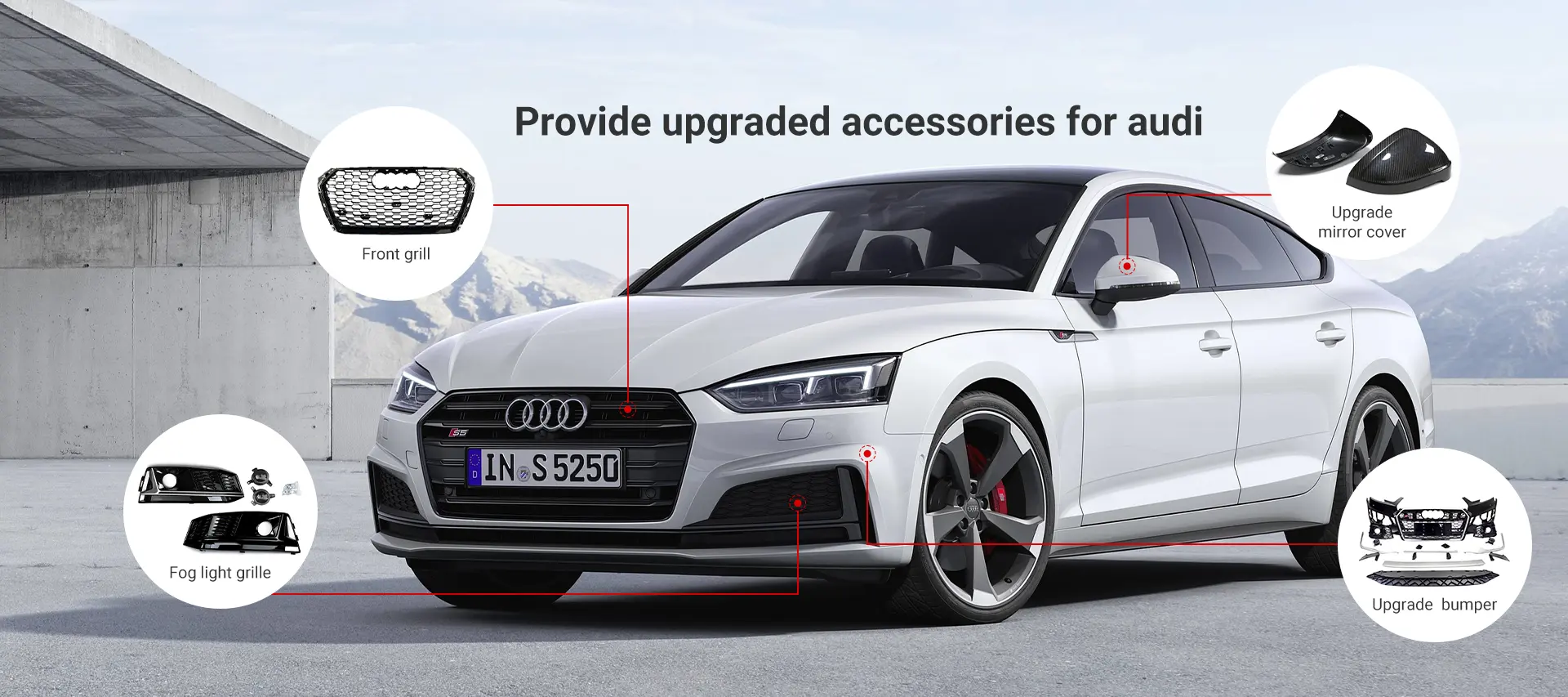
Choosing the best Front Grill Audi requires more than matching a glossy image online. It demands correct fitment, material knowledge, safety awareness, and careful model-year verification. Audi grilles vary across the A3, A4, A6, Q5, and performance-focused S models. Even small differences can affect mounting points, camera openings, parking sensors, and emblem placement.
The market also reflects a practical reason for better replacement choices. S&P Global Mobility’s 2024 U.S. Vehicle Age report places the average vehicle age at about 12.6 years. Older cars increasingly need refreshed exterior components. Still, a cheaper grille is not automatically the smarter purchase. It may use thin ABS plastic, uneven honeycomb edges, weak clips, or a poorly aligned license-plate bracket. That can create visible gaps around the bumper.
Safety comes first.
The U.S. National Highway Traffic Safety Administration repeatedly emphasizes proper sensor visibility and calibration for driver-assistance systems. Therefore, a grille covering radar or camera equipment needs special attention. Check the original Audi part number, bumper generation, sensor layout, and installation instructions before ordering. The Insurance Institute for Highway Safety also highlights the importance of reliable front-end sensing technologies in modern vehicle safety evaluations.
A strong choice balances appearance, durability, compatibility, and legal road requirements. OEM parts offer predictable quality, while aftermarket options can provide distinctive designs and lower prices. However, neither option is perfect. Some listings omit critical measurements. Some buyers also overlook calibration costs after installation. This guide examines the details that make a Front Grill Audi genuinely suitable, not merely attractive in a product photograph.
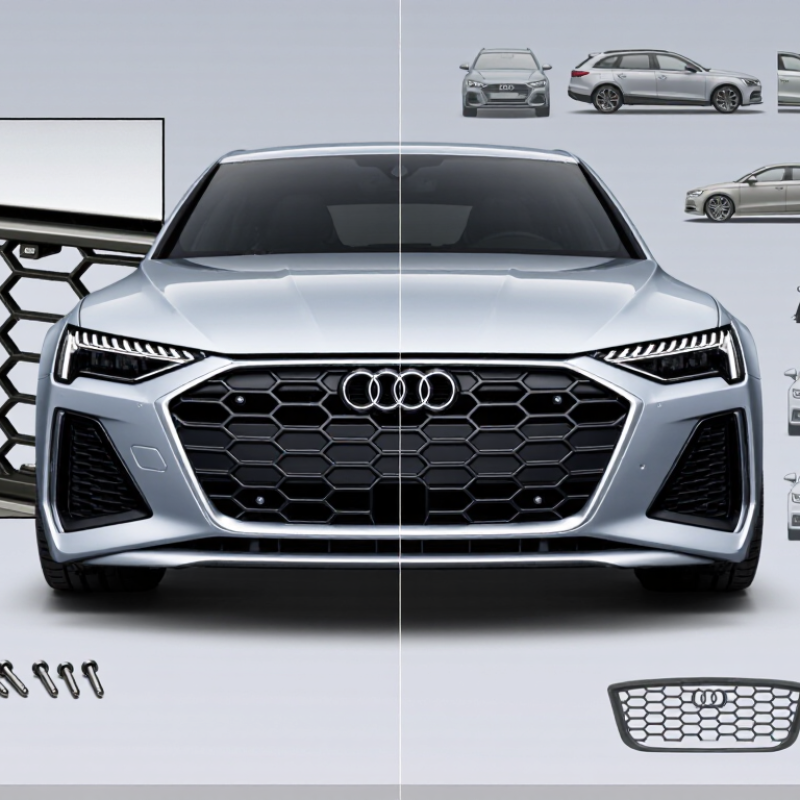
Define Audi Grille Types, Model Years, and OEM Part-Number Compatibility
Choosing the best Audi front grille starts with identifying its exact grille type. Common designs include single-frame, honeycomb, vertical-slat, and sensor-compatible versions. Each shape matches a specific bumper, mounting pattern, and trim package. A grille may look correct online but still leave gaps around the headlights. Measure the opening before ordering. Small differences matter.
Model year is equally important. A grille for a pre-facelift vehicle may not fit its facelift successor, even when both share the same body code. Check the production date, chassis code, engine configuration, and parking-sensor layout. Then compare the complete OEM part number, including suffix letters. Those letters can indicate finish, camera provision, or regional equipment. Do not rely on a shortened listing title. It is risky.
From workshop checks, the most reliable match uses three references: the vehicle identification number, the original grille label, and the parts catalog. Confirm whether brackets, emblem mounts, shutters, or radar windows are included. Some aftermarket grilles reuse factory clips poorly, causing vibration on rough roads. I once trusted a photograph and missed a sensor aperture. That mistake made the replacement expensive. Fitment is not guesswork. Still, catalog data can contain errors, so compare physical dimensions and request installation photos when details conflict.
| Vehicle Line | Typical Model Years | Platform / Generation | Factory Grille Style | Common Front-End Configuration | OEM Part-Number Reference Pattern | Compatibility Guidance |
|---|---|---|---|---|---|---|
| A3 Sedan | 2015–2020 | 8V facelift generation | Singleframe Honeycomb on S line / performance versions |
Standard bumper or S line bumper; front camera and parking-sensor openings may differ. | 8V0 853 651 family is commonly associated with the center grille; the final suffix varies by trim, finish, and equipment. | Match the bumper design, pre-facelift or facelift year, emblem mount, camera opening, and sensor locations before ordering. |
| A4 Sedan / Avant | 2013–2015 | B8.5 facelift | Horizontal-bar Singleframe | Standard, S line, and S4-style bumpers use different grille contours and mounting points. | 8K0 853 651 family is used for many B8/B8.5 center grilles; suffixes identify finish and equipment. | Do not assume B8 and B8.5 grilles interchange. Check the headlamp shape, bumper edge, and grille mounting tabs. |
| A4 Sedan / Avant | 2017–2019 | B9 pre-facelift | Wide Singleframe Vertical or honeycomb inserts on sport trims |
Different versions exist for standard, S line, S4, camera-equipped, and front-parking-sensor bumpers. | 8W0 853 651 family is commonly used for B9 center grilles; exact suffix depends on trim and options. | B9 pre-facelift grilles are not direct replacements for 2020-up B9.5 grilles because the bumper and grille profiles changed. |
| A4 Sedan / Avant | 2020–2024 | B9.5 facelift | Updated Singleframe Honeycomb on S line / S4-style designs |
Camera, radar, parking sensor, and license-plate mounting provisions may be integrated into the grille. | 8W0 853 651 family may continue with different suffixes for facelift specification and equipment. | Verify the complete part number, not only the first seven characters. Camera and radar-compatible grilles require matching openings and brackets. |
| A6 Sedan / Avant | 2012–2018 | C7 / C7.5 | Large Singleframe Honeycomb on S6 / RS-style applications |
Standard, S line, S6, and black-optic-style grilles have different trim strips and mounting details. | 4G0 853 651 family is commonly associated with C7 center grilles; suffixes vary by finish, trim, and sensors. | Confirm whether the grille is for a standard bumper, S line bumper, or performance-model bumper. These are not universally interchangeable. |
| A6 Sedan / Avant | 2019–2024 | C8 | Wide Singleframe Vertical or honeycomb patterns by trim |
Some versions include openings or brackets for front camera, radar, parking sensors, and active driver-assistance hardware. | 4K0 853 651 family is used for many C8 center-grille applications; the suffix identifies the precise specification. | Check the vehicle build configuration and driver-assistance equipment. A visually similar grille may not accept the original sensor brackets. |
| Q5 | 2009–2017 | 8R | Tall Singleframe S line / SQ5-specific patterns |
Standard and S line bumpers use different grille shapes; fog-lamp and lower-bumper design can also affect fitment. | 8R0 853 651 family is commonly associated with the 8R center grille. | Use the bumper generation and trim level as the primary fitment checks. SQ5-related grilles should not be assumed to fit a standard Q5 bumper. |
| Q5 | 2018–2024 | FY | Octagonal Singleframe Honeycomb on sport and performance trims |
Versions differ for standard, S line, SQ5, camera-equipped, and parking-sensor-equipped vehicles. | 80A 853 651 family is commonly associated with FY center grilles; suffixes vary by trim, finish, and equipment. | Confirm the model year, bumper package, grille surround finish, camera aperture, and sensor layout before purchase. |
| Q7 | 2017–2019 | 4M pre-facelift | Large octagonal Singleframe | Standard, S line, and SQ7-style grilles have different insert designs and mounting geometry. | 4M0 853 651 family is commonly used for 4M center-grille applications. | Pre-facelift and facelift Q7 grilles are not direct substitutes. Check the bumper profile and sensor or camera provisions. |
| Q7 | 2020–2024 | 4M facelift | Revised octagonal Singleframe Vertical or honeycomb inserts by trim |
Front camera, radar, and parking-sensor configurations can require dedicated grille brackets or openings. | 4M0 853 651 family may include facelift-specific suffixes for trim and driver-assistance equipment. | Use the complete OEM number and VIN-based catalog lookup to verify facelift compatibility and sensor placement. |
Related Posts
-
Top Front Grill Designs for Audi Cars What Makes Them Stand Out?
-

Top 10 Car Bodykits You Must Consider for Your Vehicle?
-
Ultimate Guide to Audi Accessories for 2025 Top Trends and Must Haves
-
Top Audi Auto Parts for Global Buyers Today?
-
How to Choose the Right Front Bumper for Global Buyers?
-

2026 How to Choose the Right Audi Body Kit for Your Vehicle?


