Top 10 Car Bodykits You Must Consider for Your Vehicle?
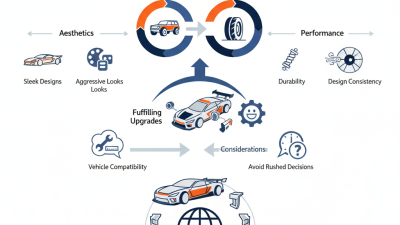
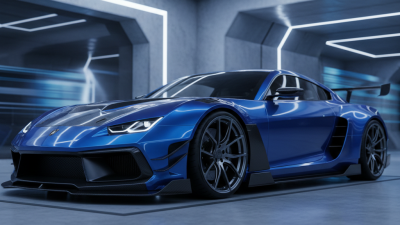
Upgrading your vehicle's appearance is an exciting journey. One popular method is adding a car bodykit. A car bodykit can dramatically enhance the aesthetics and performance of your vehicle. It transforms the look and can improve aerodynamics.
Choosing the right car bodykit is essential. You want something that complements your vehicle’s design. However, not all bodykits are created equal; some may not fit properly. Research is crucial. Finding the perfect fit requires careful consideration of materials and design.
Many enthusiasts rave about various brands, but experiences can differ widely. Some may find their ideal choice works like magic. Others might face challenges with installation or fitment issues. Reflecting on your needs before purchasing can save time and effort. A well-chosen car bodykit can be a game-changer, enhancing both looks and driving experience.
Understanding Car Bodykits: Definition and Purpose
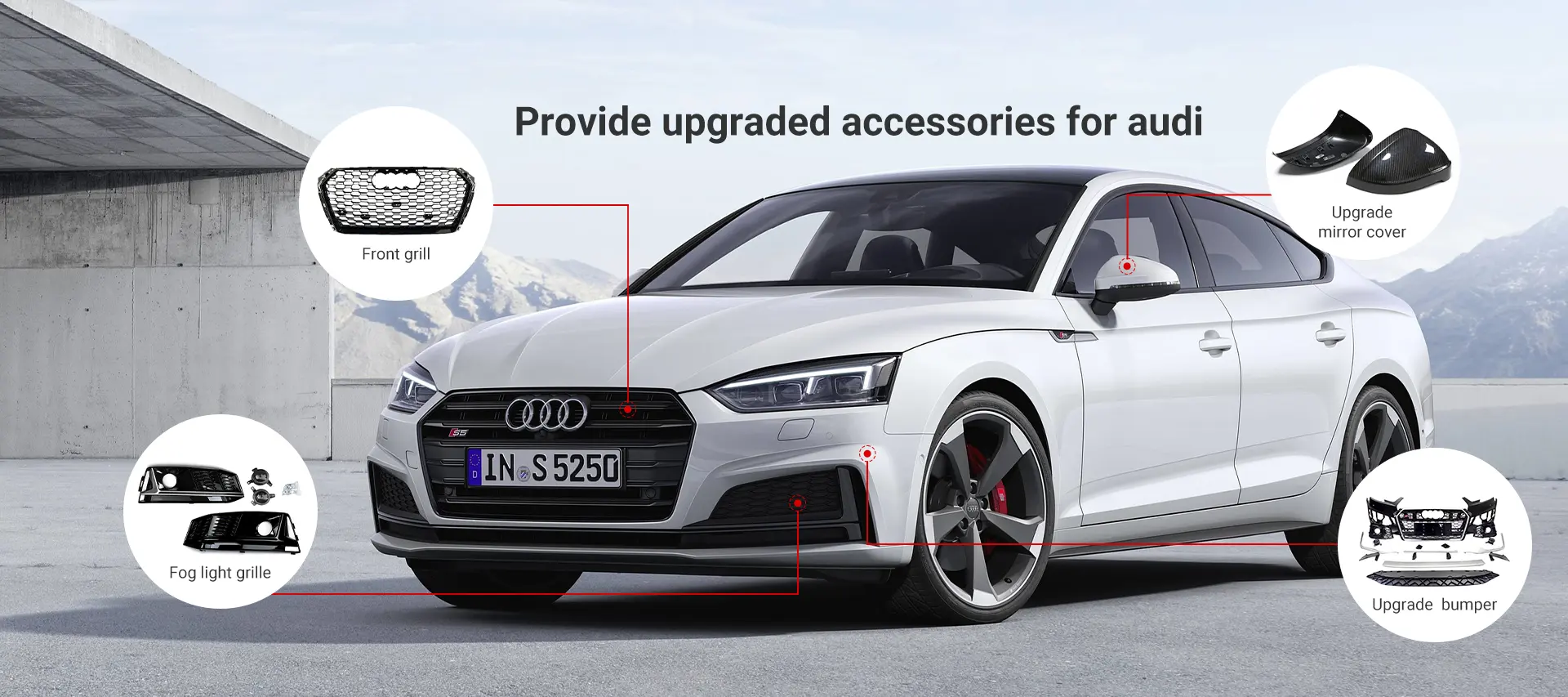
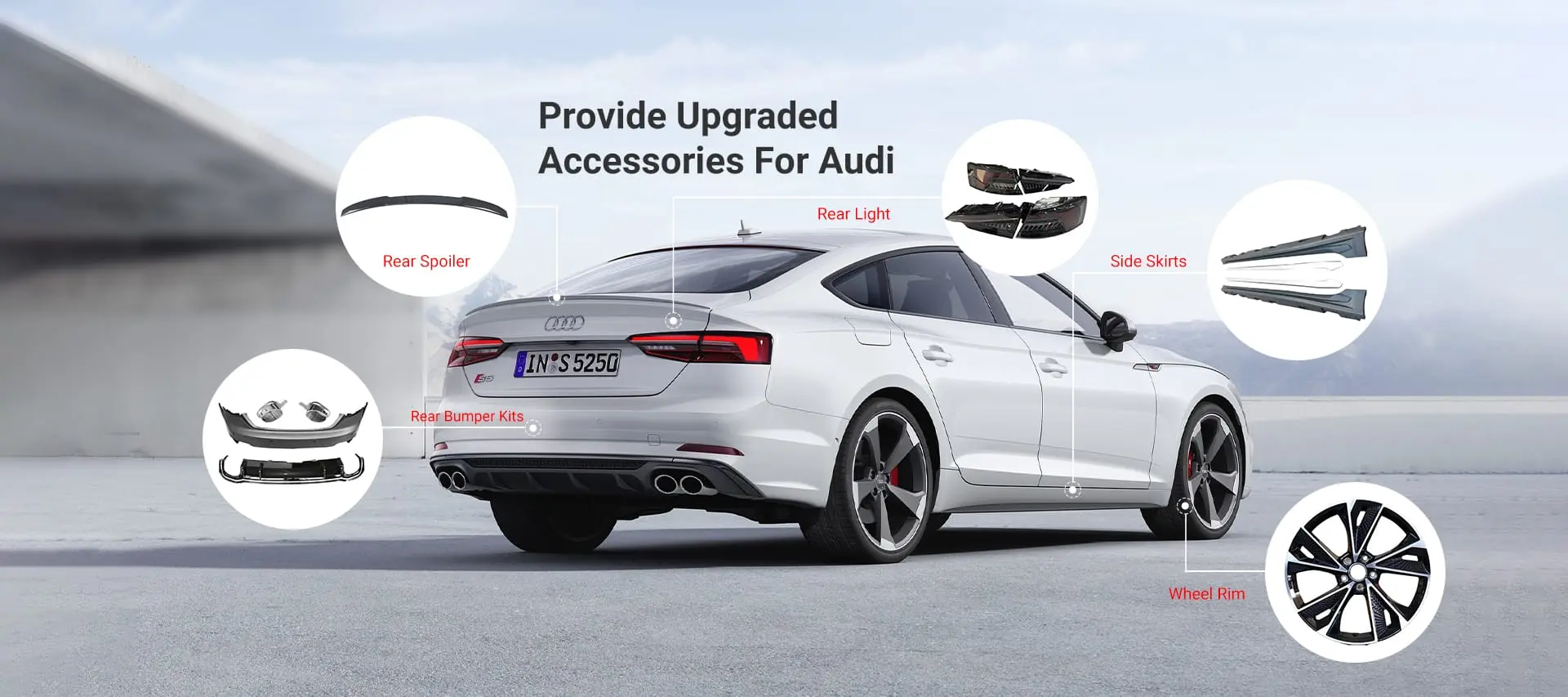
Car bodykits are more than just aesthetic upgrades. They are modifications designed to enhance a vehicle's appearance and performance. Typically, a bodykit includes components like bumpers, side skirts, and spoilers. Each piece works together to change how your car looks and feels. A well-designed kit can improve aerodynamics, which may lead to better fuel efficiency and stability.
When considering a bodykit, it’s essential to reflect on your car’s current style. Will the kit match your vehicle's design philosophy? Pay attention to the materials used. Lightweight materials can improve performance, while heavier ones may hinder it. Customization can be thrilling, but wrong choices can lead to dissatisfaction.
Tips: Always check reviews of the bodykit before purchase. Look for feedback on installation ease and fit. It's crucial to choose a kit that aligns with both your stylistic goals and driving needs. Be aware of local regulations. Some kits might not be street-legal, leading to fines if installed. Finding a balance between style and practicality is vital in your selection process. Your car should reflect your personality without compromising safety or legality.
Top 10 Car Bodykits You Must Consider for Your Vehicle
This chart represents the popularity of various types of car bodykits based on survey data from automotive enthusiasts. The data shows the percentage of preference among different types of bodykits.
Factors to Consider When Choosing a Bodykit for Your Vehicle
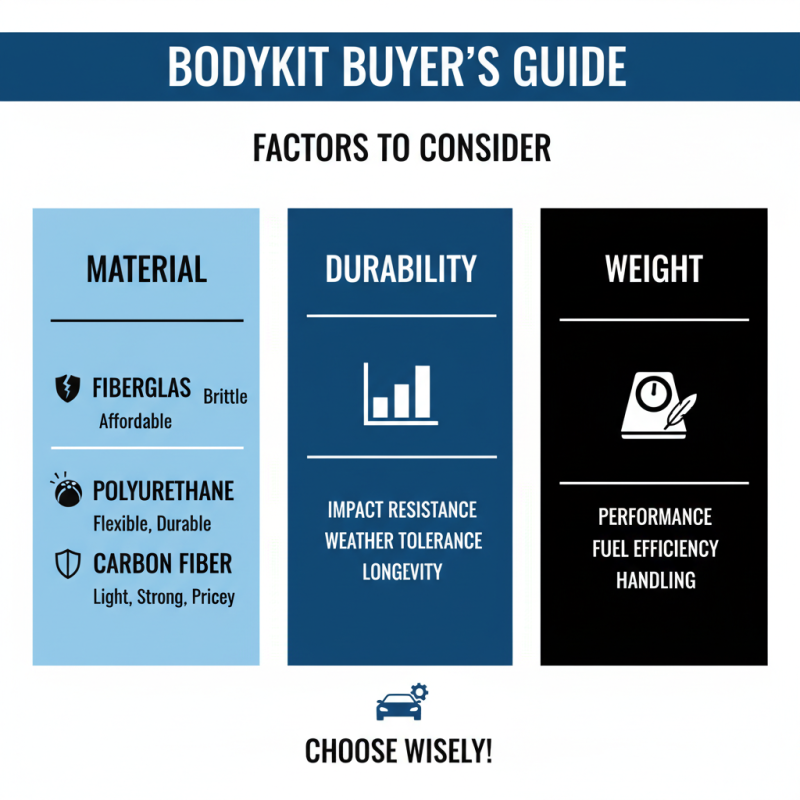
When choosing a bodykit, several factors come into play. First, consider the material. Options include fiberglass, polyurethane, and carbon fiber. Each material has different durability and weight characteristics. Fiberglass is affordable but may crack easily. Polyurethane is more flexible and resistant to impacts. Carbon fiber is lightweight and strong but usually the most expensive.
Next, think about the design. Ensure it complements your vehicle’s lines. A bodykit should enhance aesthetics without overwhelming. Take time to visualize how it fits with your car’s style. Consider your vehicle's purpose too. A racing-focused kit may not suit a daily driver.
Tips: Research reputable manufacturers. Look for reviews and community feedback. Engage with car enthusiasts at shows or forums to gain insights. Installation is another aspect. Some kits require professional help. DIY installation can lead to mistakes if you lack skills. Measure twice, cut once to avoid costly errors.
Top 10 Car Bodykits: Overview and Features
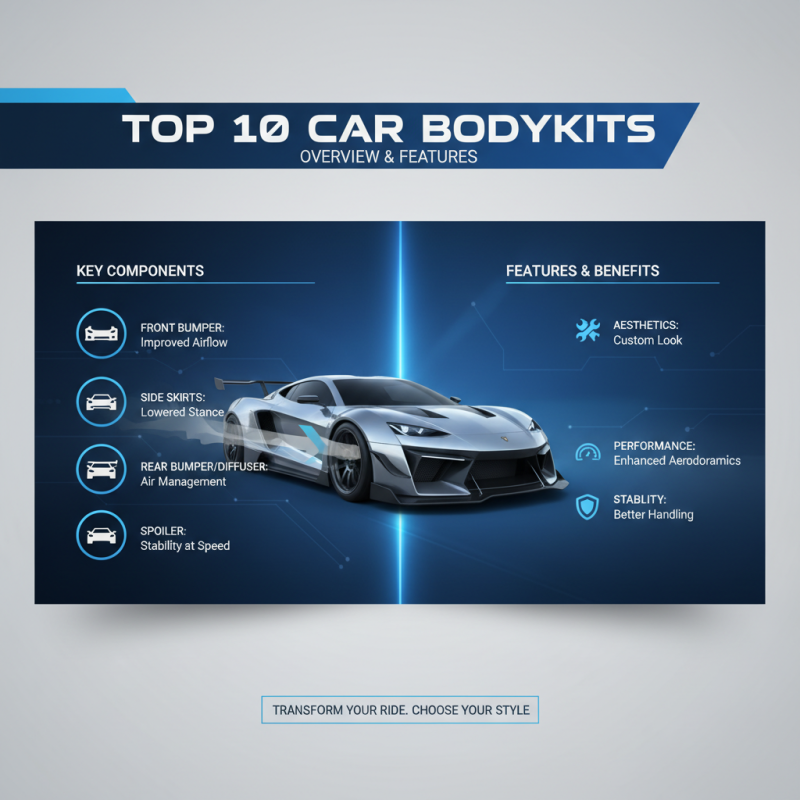
When considering bodykits for your vehicle, understand what suits your style and needs. Bodykits can transform the look of your car, enhancing both aesthetics and performance. They often include front and rear bumpers, side skirts, and spoilers. Each component plays a vital role in aerodynamics, which can lead to improved stability at high speeds.
Installation is not always straightforward. Skilled professionals may be required for a perfect fit. Misalignment can affect not only appearance but also functionality. Some kits focus on aggressive looks, while others prioritize subtle elegance. Knowing your vehicle’s design is crucial. Choose a bodykit that complements the original lines of your car.
Quality is paramount. Many kits use fiberglass or polyurethane, both of which have their pros and cons. Fiberglass can crack easily, while polyurethane tends to be more flexible. Ensure the material can withstand weather conditions. Don’t forget about paint options. A poorly chosen color can diminish the overall appeal of your vehicle. A well-executed finish can elevate a bodykit from average to extraordinary.
Installation Process of Car Bodykits: What to Expect
Installing a car bodykit may seem daunting. However, understanding the process can significantly ease your experience. It typically begins with removing the existing components. You'll need basic tools, including wrenches and screwdrivers. Ensure you have a clean area to work in. The bodykit must align perfectly with your vehicle's design. This alignment is crucial for aesthetics and functionality.
Next, the bodykit usually requires some modifications. Trimming sections may be necessary to ensure a snug fit. Keep a close eye on any gaps. Misalignment can lead to issues later on. This step can take time and patience, as rushing may result in errors. Do not hesitate to seek advice from experienced individuals. Their tips can prove invaluable.
Once the fitting is complete, it's time for installation. Usually, this involves using adhesives and fasteners. Sometimes, additional reinforcement is essential for durability. During this final stage, the kit should be checked for stability. The process might expose imperfections, such as uneven surfaces or loose fittings. Regular checks can help maintain your investment. You may need to adjust or reinforce components after installation.
Top 10 Car Bodykits You Must Consider for Your Vehicle
| No. |
Bodykit Name |
Material |
Fitment Type |
Price Range |
| 1 |
Sporty Kit |
Fiberglass |
Complete |
$800 - $1200 |
| 2 |
Widebody Kit |
Carbon Fiber |
Partial |
$1500 - $2500 |
| 3 |
Luxury Aerokit |
Polyurethane |
Complete |
$1200 - $1800 |
| 4 |
Rally Kit |
ABS Plastic |
Partial |
$700 - $1100 |
| 5 |
Custom Street Kit |
Fiberglass |
Custom Fit |
$1000 - $2000 |
| 6 |
Performance Bodykit |
Carbon Fiber |
Complete |
$2000 - $3500 |
| 7 |
Aggressive Style Kit |
Polyurethane |
Partial |
$750 - $1300 |
| 8 |
Classic Retro Kit |
Fiberglass |
Custom Fit |
$900 - $1600 |
| 9 |
Off-road Bodykit |
ABS Plastic |
Complete |
$950 - $1500 |
| 10 |
Minimalist Kit |
Polyurethane |
Partial |
$500 - $900 |
Maintenance Tips for Keeping Your Bodykit in Top Condition
Maintaining your car bodykit is essential for both aesthetics and functionality. Regularly inspect for scratches, chips, or damage. Even minor wear can lead to bigger problems if ignored. Use a soft cloth and mild soap to clean your bodykit. Avoid harsh chemicals that can cause discoloration or deterioration. It’s crucial to keep the surfaces protected and polished.
Consider applying a layer of wax or sealant every few months. This will not only enhance the shine but also create a protective barrier. When driving, stay vigilant. Debris from the road can chip your bodykit. If you notice any damage, address it promptly to prevent rust or further issues. A small crack today can become a significant problem tomorrow.
Storage is another aspect often overlooked. Parking in a garage can shield your vehicle from harsh weather. If that’s not an option, invest in a high-quality car cover. It’s worth it to protect your investment. Ensure that the cover is breathable to prevent moisture buildup. Reflecting on these maintenance tips can help you preserve the beauty and integrity of your bodykit for years to come.